
Builders planning for future Ethereum accounts face a question: how could users move to quantum-resistant accounts without interrupting the network? A community proposal from nonprofit Ethereum research lab Ethlabs sets out a possible path, but it is not an agreed Ethereum upgrade.
In a report published November 12, 2026, at 11:42 a.m. UTC+8, Deep Tide TechFlow described Ethlabs’ pqai27 proposal to make 2027 a target year for quantum-resistant and AI-resilient capabilities. The report cited DeFiLlama data showing more than $41.16 billion in Ethereum total value locked as of November 12. Ethlabs argued that shorter quantum-migration timelines and advancing AI capabilities make defensive work more urgent. Its proposed “AI resilience” rests on simple hash-based cryptographic primitives, formal verification and diversity among Ethereum clients.
A baseline, then a scaling goal
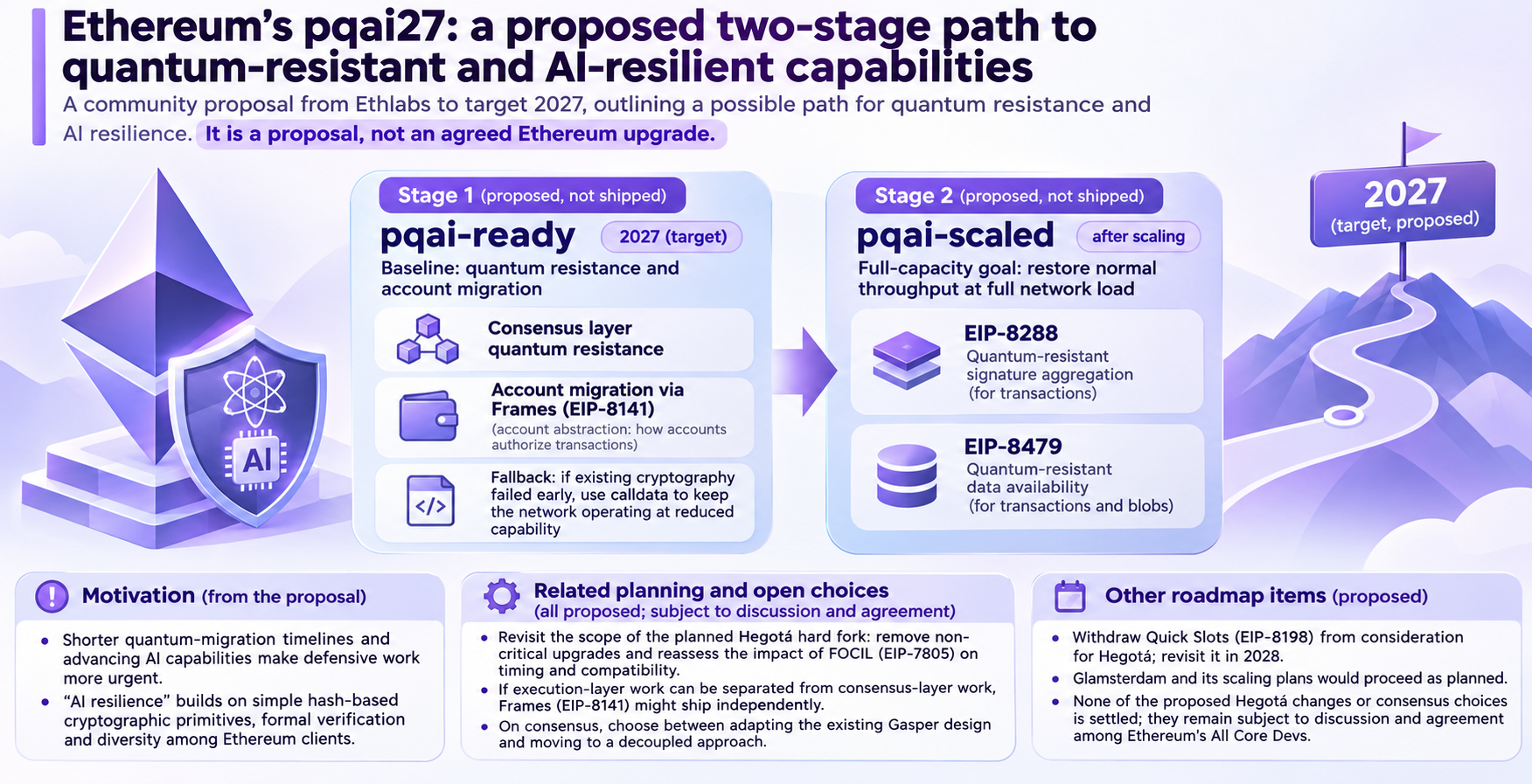
The proposal separates its 2027 roadmap into two goals:
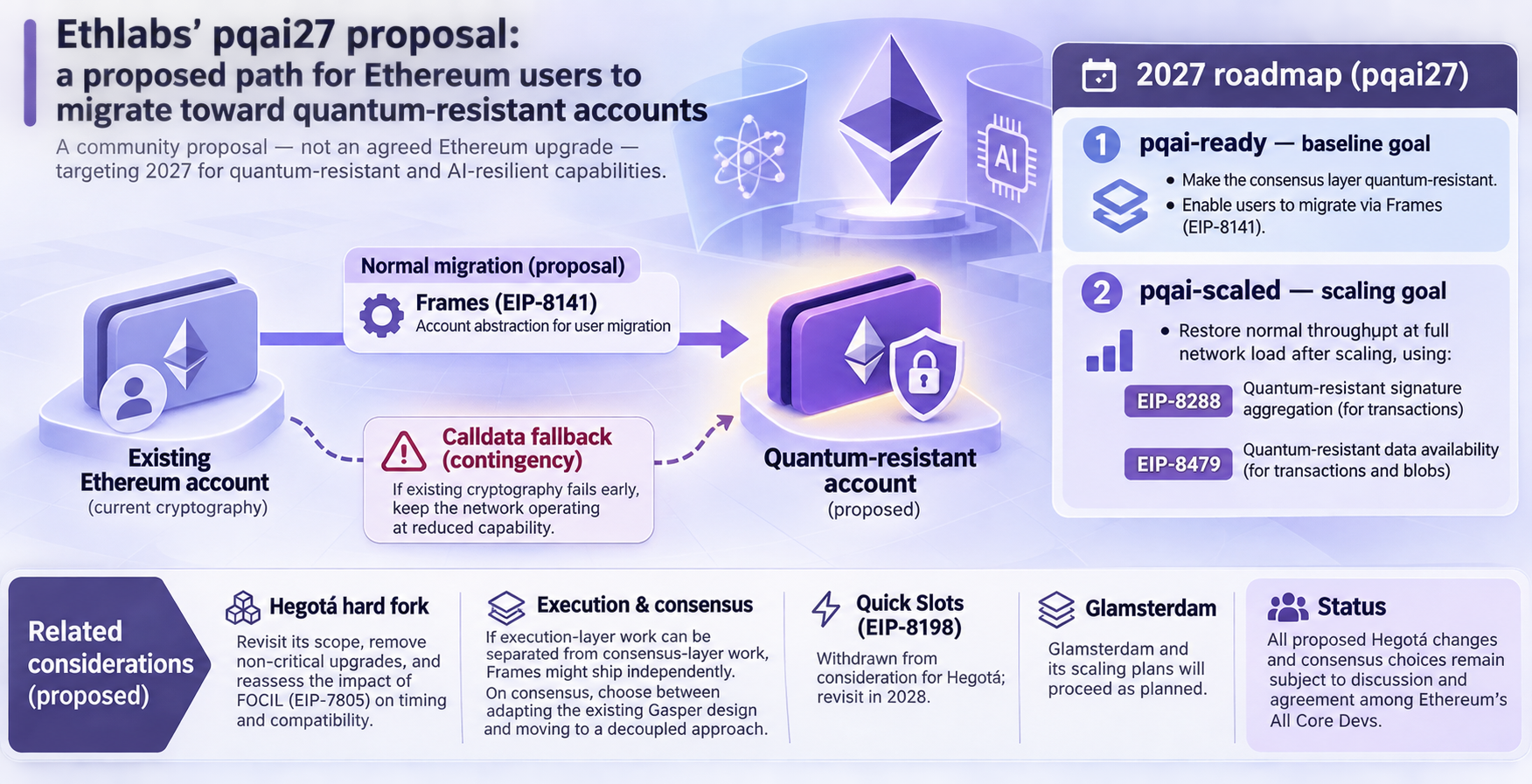
- “pqai-ready” would make the consensus layer quantum-resistant and enable users to migrate through the Frames account-abstraction proposal, EIP-8141. Account abstraction concerns how accounts authorize transactions. If existing cryptography failed early, the proposal envisages a fallback using calldata—transaction data supplied to the network—to keep it operating at reduced capability.
- “pqai-scaled” would aim to restore normal throughput at full network load after scaling, using proposed quantum-resistant signature aggregation (EIP-8288) and quantum-resistant data availability (EIP-8479) for transactions and blobs. Blobs are data carried for Ethereum’s scaling systems.
What would need to change
Ethlabs suggested revisiting the scope of the planned Hegotá hard fork, removing upgrades outside the critical path and reassessing how the anti-censorship proposal FOCIL (EIP-7805) might affect timing and compatibility. If execution-layer work could be separated from consensus-layer work, Frames might ship independently. On consensus, developers would still have to choose between adapting the existing Gasper design and moving to a decoupled approach.
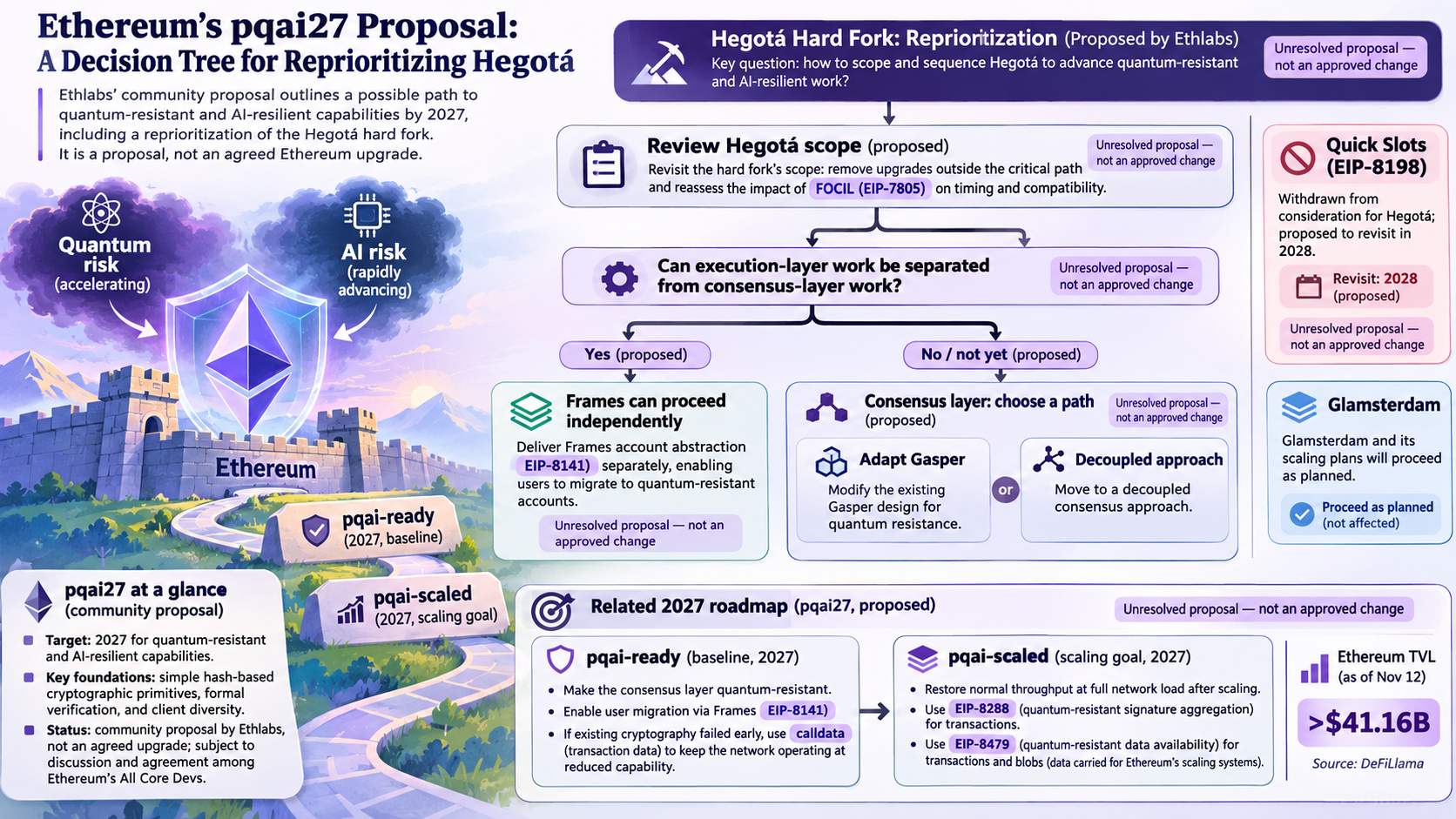
Ethlabs also said it was withdrawing its Quick Slots (EIP-8198) proposal from consideration for Hegotá and would revisit it in 2028. The report said Glamsterdam and its scaling plans would proceed as planned. None of the proposed Hegotá changes or consensus choices was settled: they remained subject to discussion and agreement among Ethereum’s All Core Devs.
Source: techflowpost.com (originally published 2026-11-12 11:42 UTC+8)