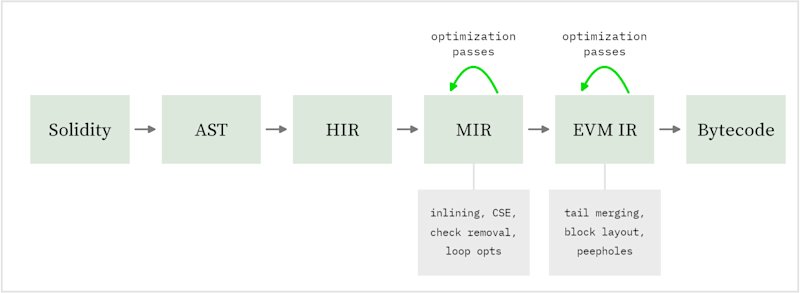
For builders using Foundry, the change in Solar v0.3 is that it can now compile Solidity into EVM bytecode. In its November 3, 2026 release post, Paradigm said the Rust-based compiler ships in Forge alongside a new language-server command for editor features.
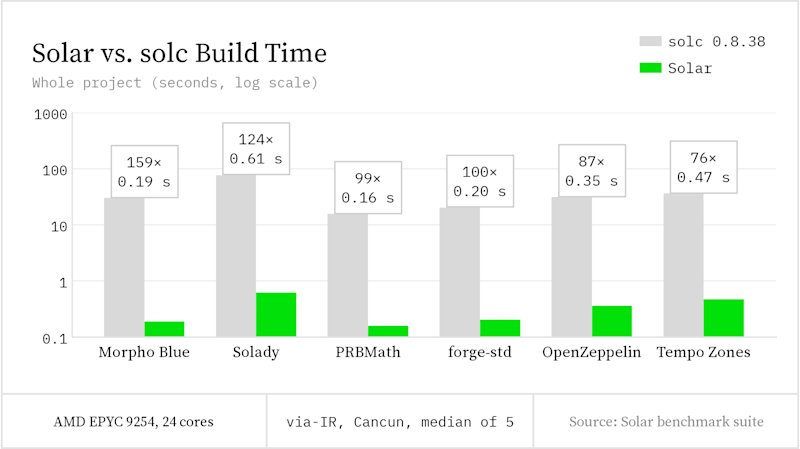
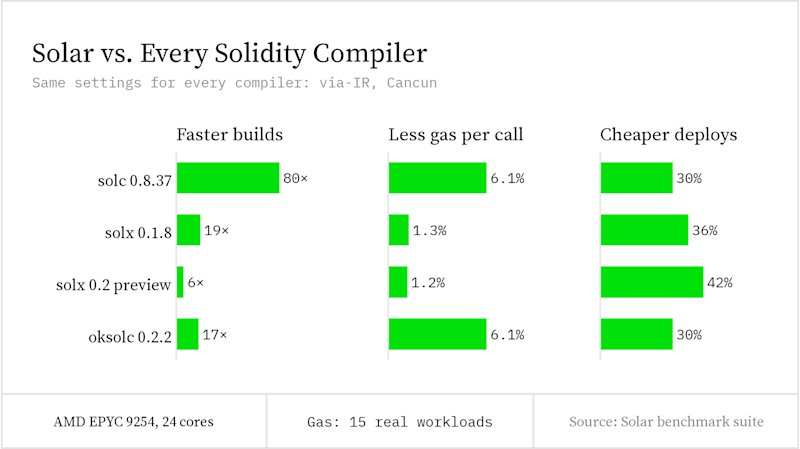
Paradigm reported that Solar built six real-world Solidity projects 100× faster on average than solc using its via-IR pipeline, with a maximum of 159×. That comparison used Solar’s default eight threads against one thread for solc. With each project’s own settings, Solar was more than 30× faster on average, according to the post. Paradigm also reported that, on one thread, Solar remained 19× faster than solc with via-IR and 7× faster with each project’s own settings. In the via-IR comparison, solc failed to compile Uniswap v4 core and Seaport with a “Stack too deep” error; Solar compiled Uniswap v4 core in 0.35 seconds.
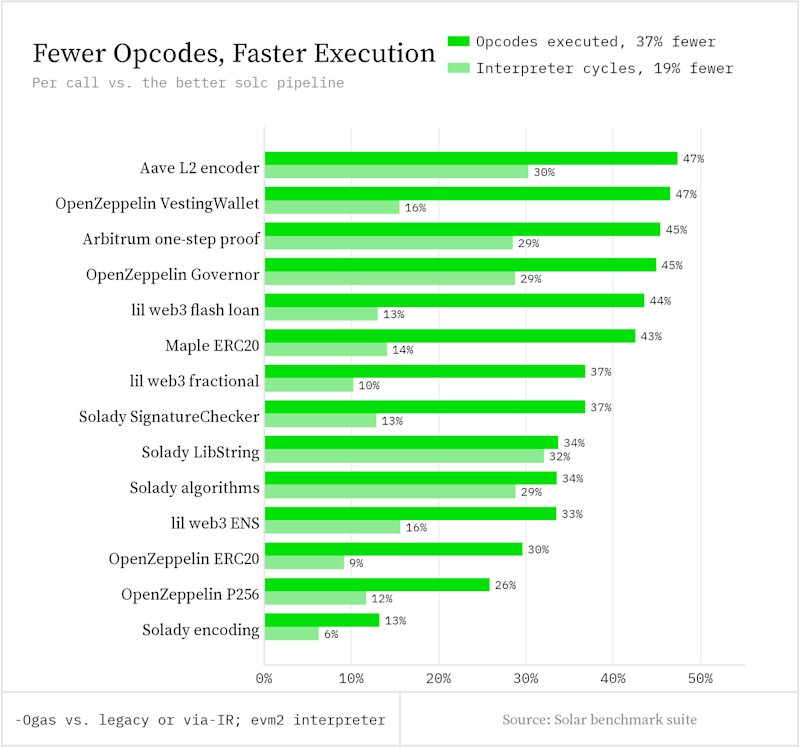
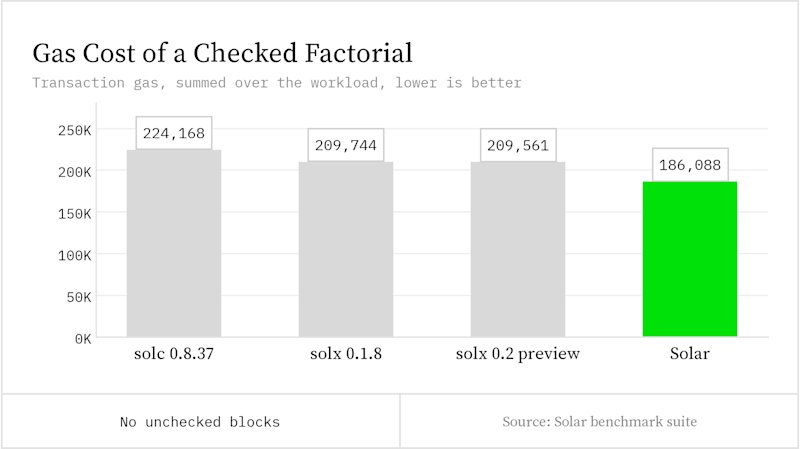
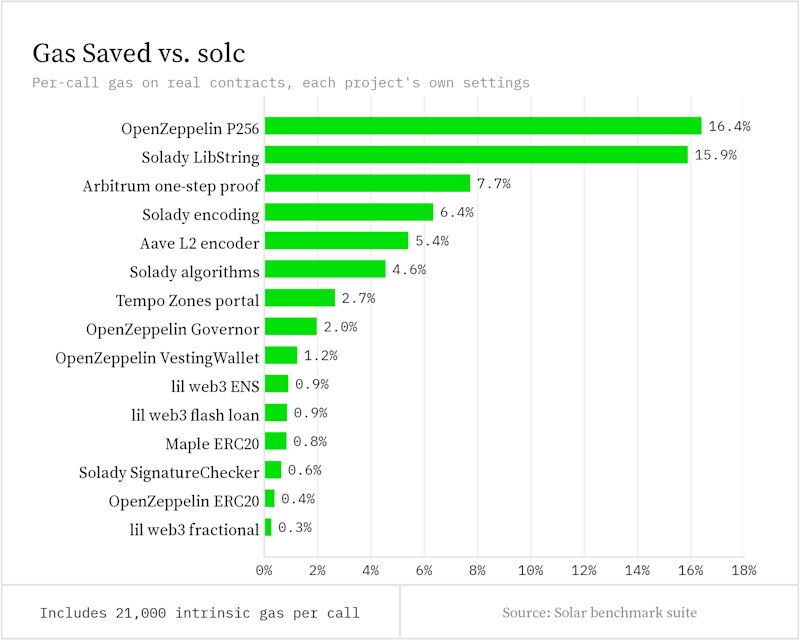
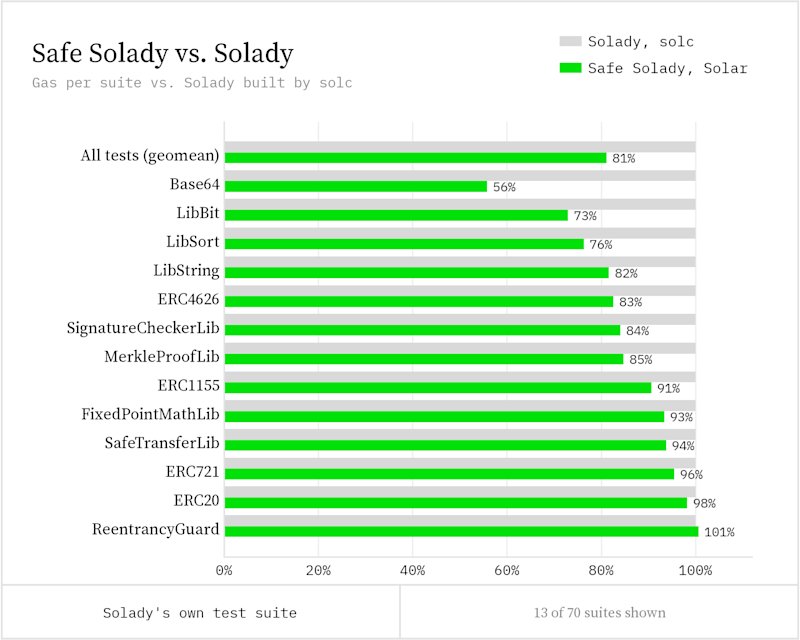
In Paradigm’s benchmark suite, which deployed compiled contracts to a local node and replayed matching transactions, Solar-generated code used 5% less gas to run, cost 26% less to deploy and was 29% smaller than solc output. These are reported benchmark results, not a guarantee for every contract. Paradigm also said its checked-Solidity rewrite of Solady used 19% less gas with Solar than the original Solady compiled with solc; the rewrite retained small, review-tagged uses of assembly and unchecked code where needed.
To try the compiler, Paradigm instructs developers to update Foundry with foundryup, then run forge build --use solar or forge test --use solar. forge lsp starts Solar’s Solidity language server, which provides editor features including completion, rename and errors as you type. Paradigm described compiler-based security checks, verified optimization tooling, a standard library and debug-information support as future plans, not features delivered in v0.3.
Source: paradigm.xyz (originally published 2026-11-03 00:00 UTC+8)