Zcash builders and wallet operators have two changes to account for under NU7: a new path for transaction fees to become future block rewards, and a shorter target interval between blocks. The upgrade activated on mainnet at block 3,543,405, according to Decrypt’s November 6, 2026 report.
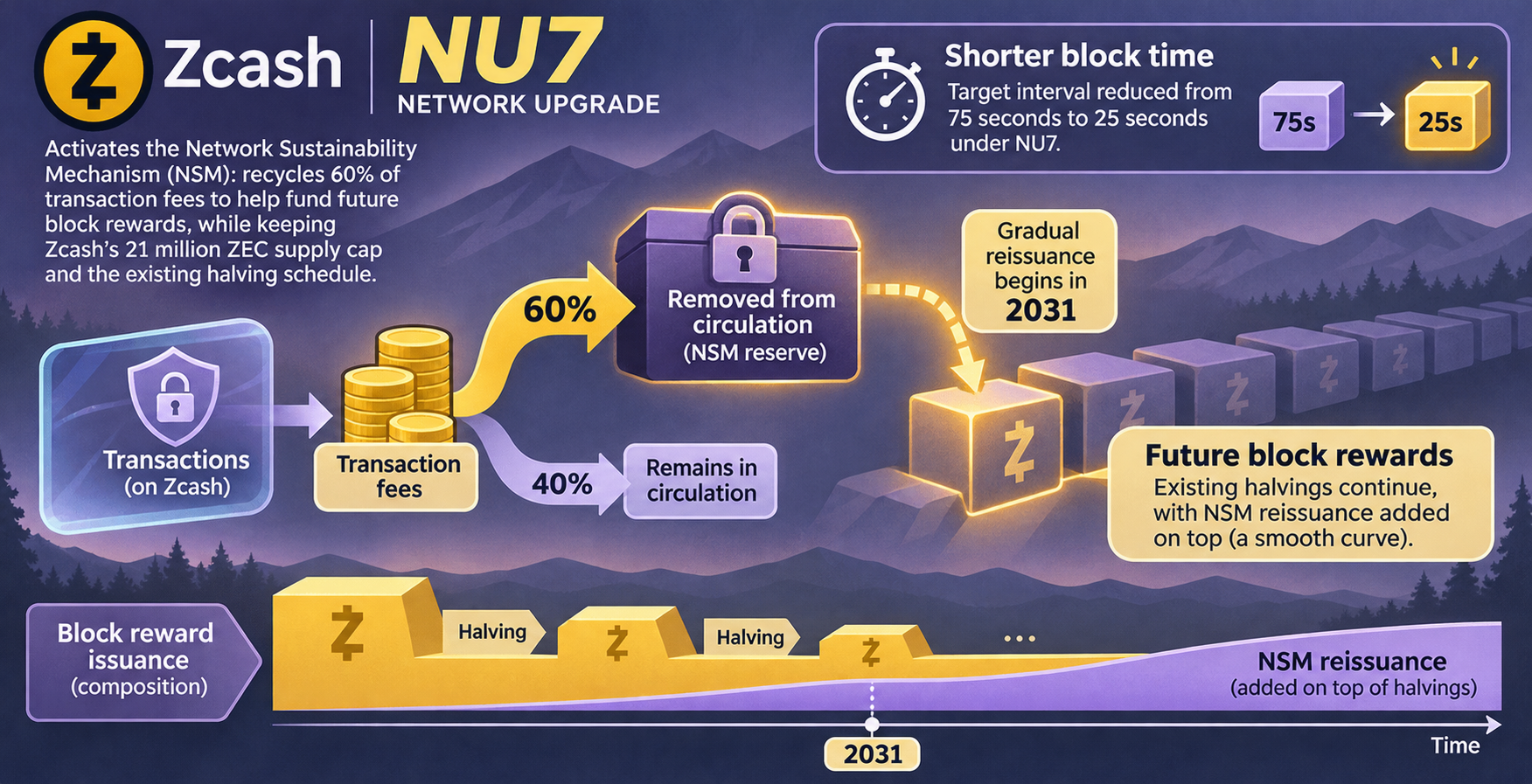
How fee recycling works
NU7 activated the Network Sustainability Mechanism (NSM). It removes 60% of transaction fees from circulation and gradually reissues those funds through future block rewards, while retaining Zcash’s 21 million ZEC supply cap. Reissuance is scheduled to begin in 2031, following a smooth curve on top of the existing halving schedule. The aim is to help fund network security as the subsidy portion of block rewards declines; the upgrade does not establish whether future rewards will be sufficient.
Shielded Labs developed the mechanism from an earlier idea by developer Nate Wilcox called the Zcash Posterity Fund, according to Shielded Labs’ Jason McGee. The group’s original design would have replaced halvings with smooth issuance. Community panels supported it, but coinholders did not, so the adopted design kept halvings. A separate proposal, still under consideration at the time of the report, would have Zcash Community Grants contribute 50,000 ZEC from its treasury to the NSM; that contribution was not part of NU7’s enacted rules.
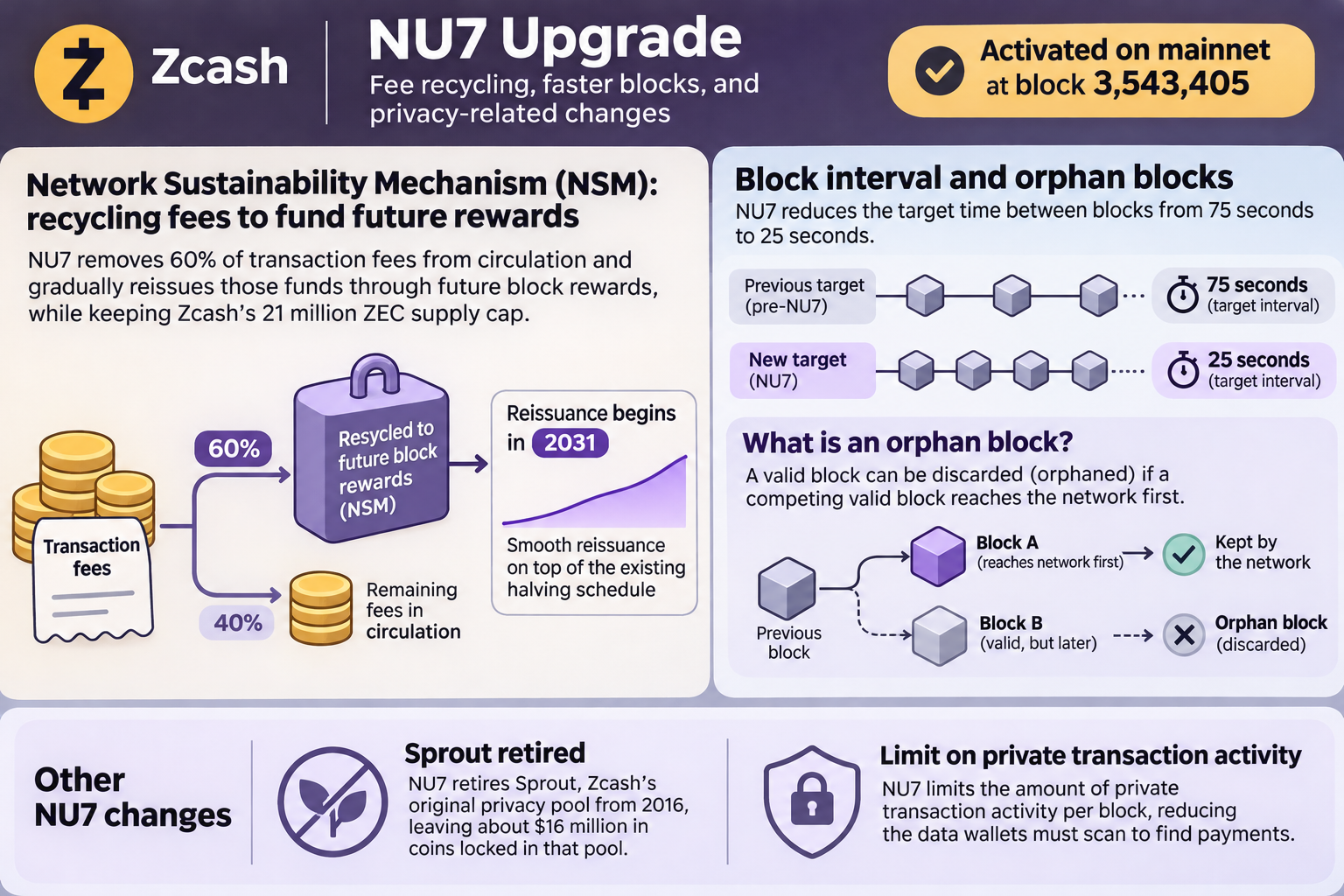
Block timing and privacy-related changes
NU7 reduced the target time between blocks from 75 seconds to 25 seconds, the Zcash Foundation said. A shorter interval can increase orphan blocks: valid blocks discarded when a competing block reaches the network first. In a stress test with 80 nodes across 11 regions and every block full of private transactions, Zakura developers measured orphan rates of 3.43% at the 25-second target and 1.57% at the 75-second target. They expected the live-network rate to remain below 1%, citing more concentrated mining and less-full blocks. Those test results and expectations are not measurements of the live network after activation.
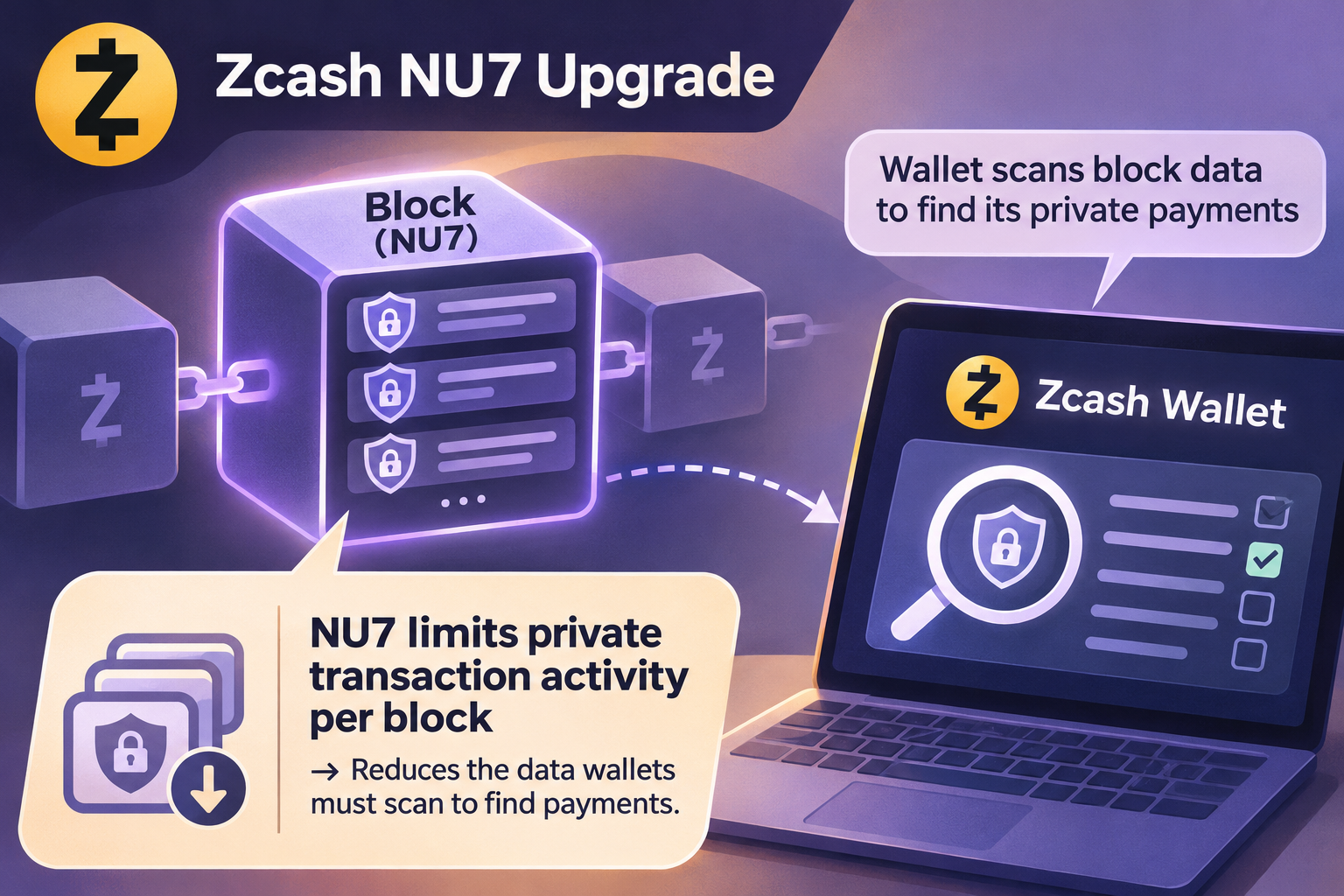
The upgrade also limits the amount of private transaction activity per block, reducing the data wallets must scan to find payments, according to the upgrade specification. It retires Sprout, Zcash’s original privacy pool from 2016; the report said coins worth about $16 million remained locked in that pool.
A separate funding debate
As of the November 6 report, the community was also debating Zcash Community Grants and its share of the Dev Fund, which receives a portion of block rewards for development. Project Tachyon, Shielded Labs, Valar Group, the Zcash Foundation and ZODL set an expedited proposal and polling timetable. Proposals were due November 8, 2026, with coinholder and community-panel polls scheduled for November 16–30. The groups said they would support a further upgrade, NU 7.1, if rough consensus emerged. That prospective upgrade was not part of NU7’s activation.
Source: decrypt.co (originally published 2026-11-06 18:13 UTC+8)