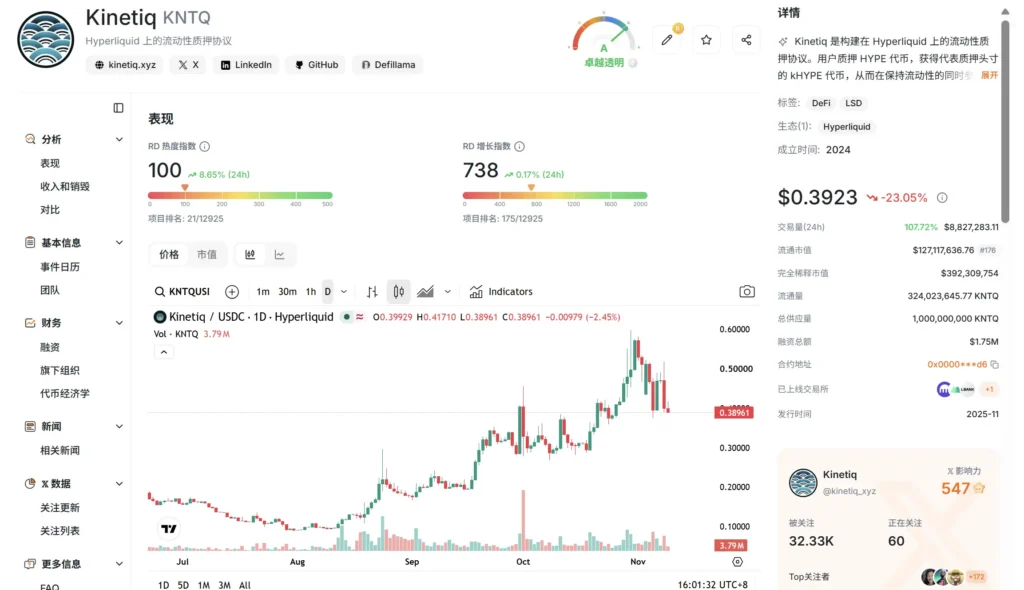
For builders considering where to deploy an EVM-compatible application, Elysium’s mainnet launch adds a Layer 2 that settles to HyperEVM, Hyperliquid’s smart-contract environment. ChainCatcher reported the launch on November 9, 2026, at 17:47 (UTC+8). Elysium was built by Kinetiq, the Hyperliquid ecosystem project behind the kHYPE liquid-staking token.
How the network is built
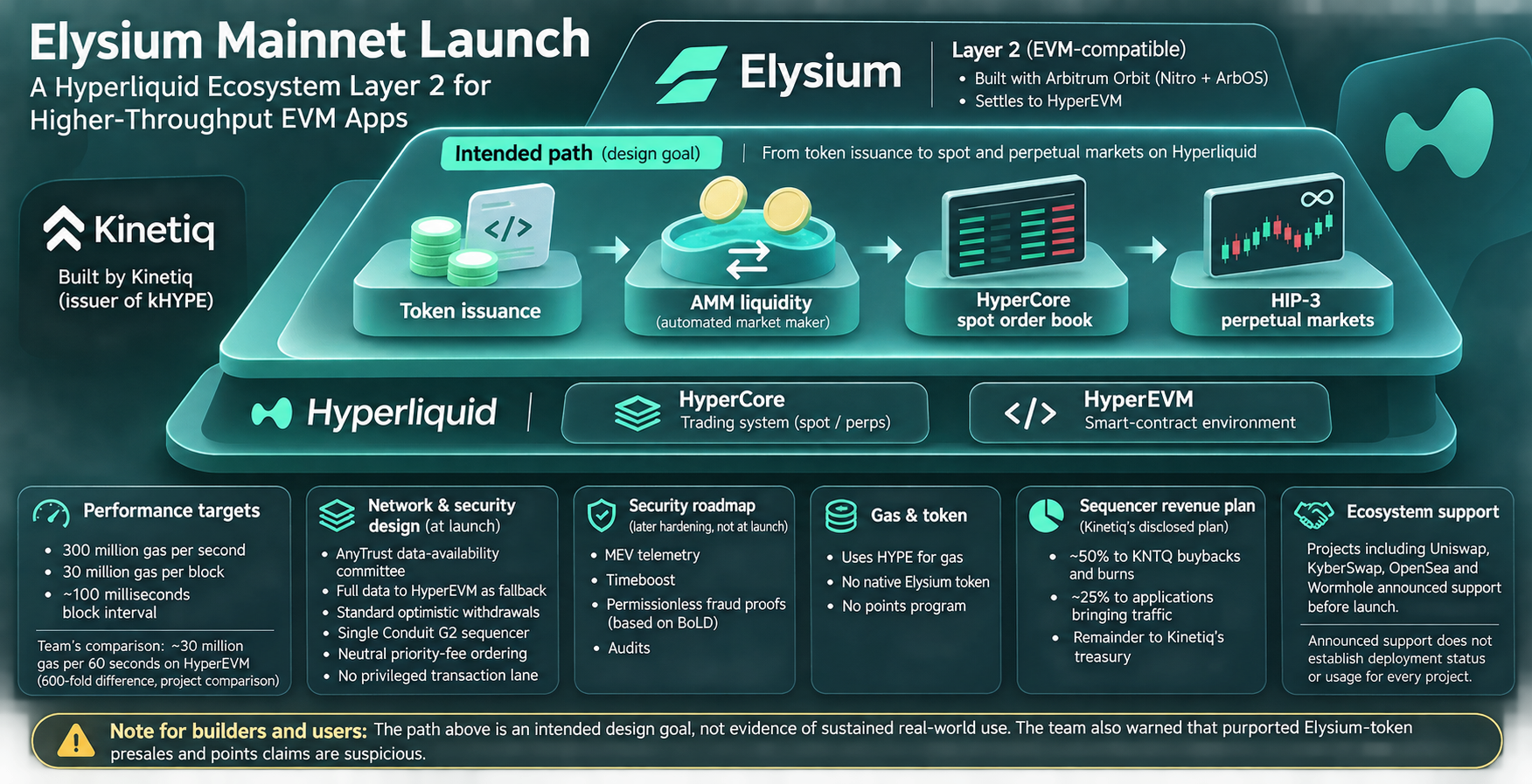
Elysium uses Arbitrum Orbit technology—Nitro and standard ArbOS—with HyperEVM as its settlement layer rather than Ethereum. It is designed to work alongside HyperCore, Hyperliquid’s trading system. The intended application path runs from token issuance and automated market maker liquidity to HyperCore’s spot order book and HIP-3 perpetual markets. That is a design goal, not evidence that the path is already seeing sustained use.
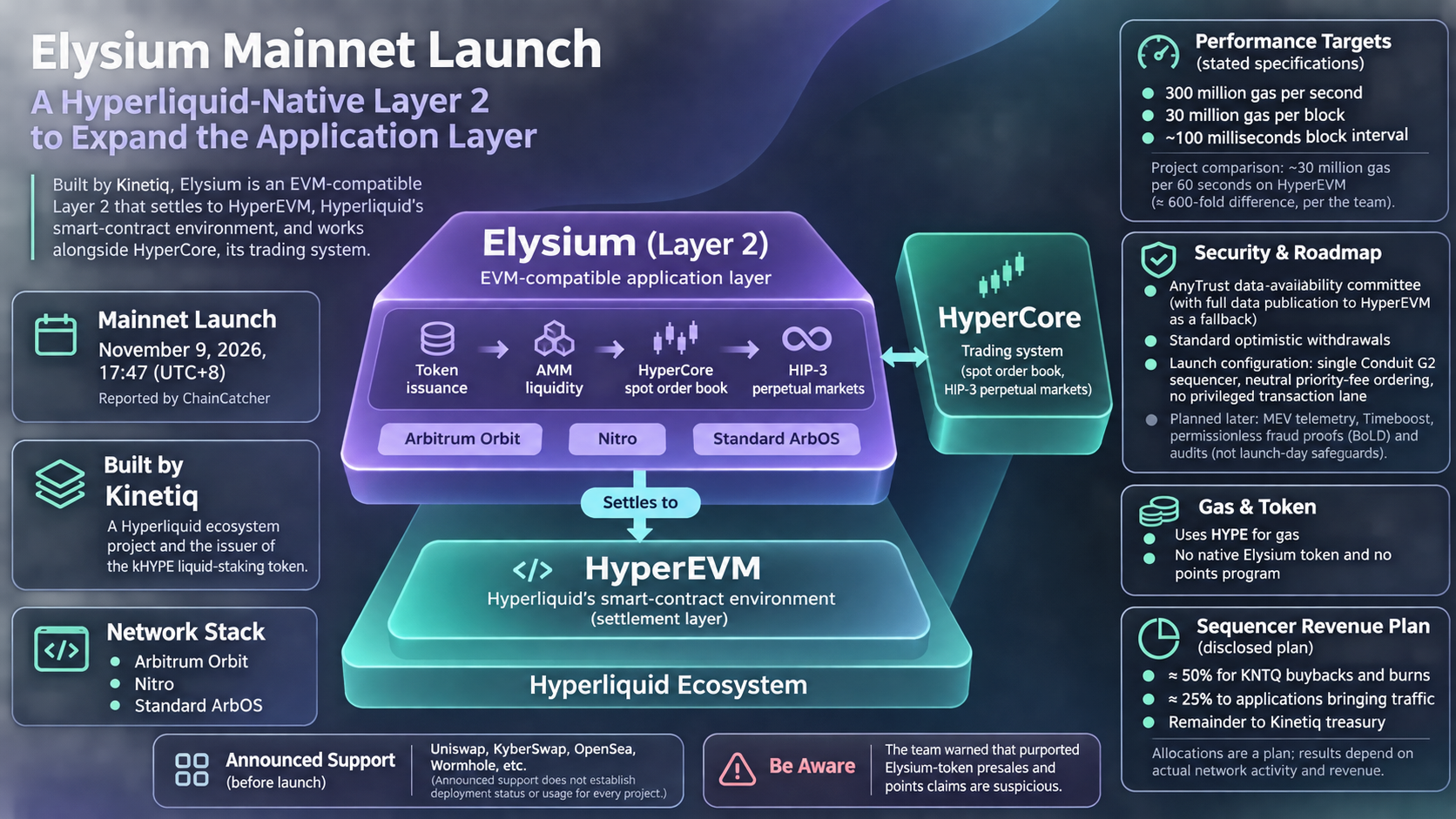
Elysium targets 300 million gas per second, 30 million gas per block and a canonical block interval of about 100 milliseconds. Its team compares that target with roughly 30 million gas per 60 seconds on HyperEVM and describes the difference as 600-fold. These are stated specifications and a project comparison, not independently established real-world throughput.
The network uses an AnyTrust data-availability committee, with publication of full data to HyperEVM as a fallback, and standard optimistic withdrawals. At launch, its configuration has a single Conduit G2 sequencer—the component that orders transactions—with neutral priority-fee ordering and no privileged transaction lane. MEV telemetry, Timeboost, permissionless fraud proofs based on BoLD, and audits were listed as later hardening work, not launch-day safeguards already in place.
What developers and users should distinguish
Elysium uses HYPE for gas and has no native Elysium token or points program. According to the report, projects including Uniswap, KyberSwap, OpenSea and Wormhole had announced support before launch. Announced support does not establish deployment status or usage for every project.
Kinetiq’s disclosed plan would direct approximately 50% of sequencer revenue to KNTQ buybacks and burns, approximately 25% to applications bringing traffic, and the remainder to its treasury. Those allocations describe a plan; their results depend on actual network activity and revenue.
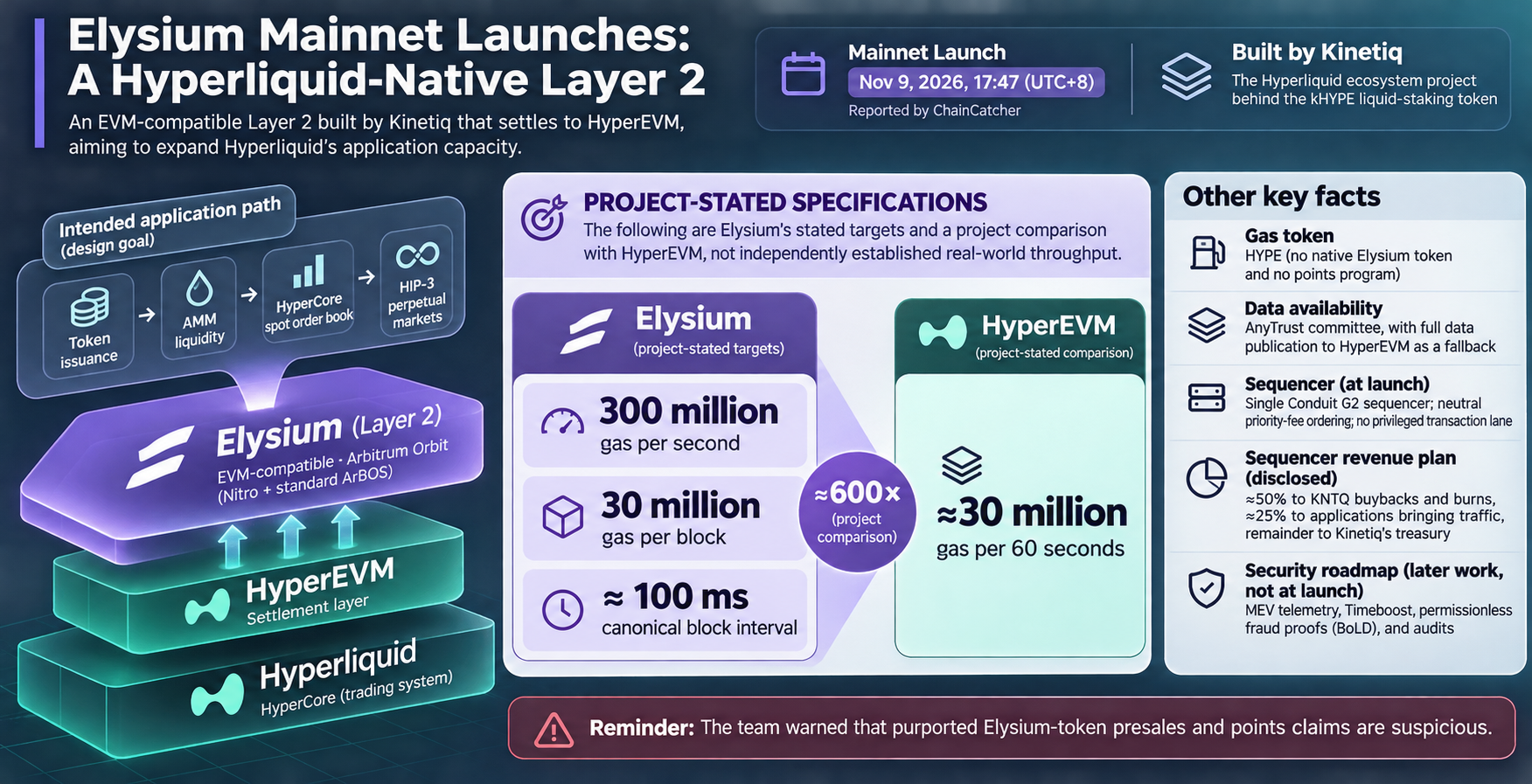
The report also says the team warned that purported Elysium-token presales and points claims are suspicious. For builders, the immediate distinction is between the launched network and features still on its security roadmap.
Source: chaincatcher.com (originally published 2026-11-09 17:47 UTC+8)