
Bitcoin traded at 60,789.52 USDT and ether at 1,702.06 USDT at 09:14 Beijing time on November 27, 2026, ahead of Deribit’s monthly options expiry. Bitcoin was down 0.02% over 24 hours and ether was down 0.15%. The broader crypto market fell more sharply: total market capitalization stood at about $2.105 trillion at 09:12, down 2.32% over 24 hours.
What the options expiry measures
Deribit’s monthly inverse options on BTC and ETH were due to expire at 16:00 Beijing time on November 27. Their combined notional value was about $7.31 billion: $6.68 billion in bitcoin options and $630 million in ether options. Those figures describe the face value of the contracts, not an amount of cryptocurrency that must be sold at expiry.
Based on positions open that morning, the estimated “max pain” levels—the settlement prices at which aggregate payouts to option holders would be lowest—were $70,000 for BTC and $2,100 for ETH. Both were well above spot. They describe the distribution of open positions, not a forecast of settlement prices.
Bitget’s separate estimates of potential liquidations put the nearest concentrations of short positions at $61,100–$61,600 for BTC and $1,713–$1,725 for ETH. For long positions, the estimated ranges were $59,300–$60,100 and $1,663–$1,677, respectively. These were areas where leveraged positions might be forced to close, not reports of completed liquidations.
US bitcoin ETF outflows preceded the holiday
US spot bitcoin exchange-traded funds recorded $453 million in net outflows on November 25, up from $231.4 million on November 24. IBIT accounted for $329.7 million, about 73% of the November 25 total. There were no new regular subscription or redemption figures during the US market holiday, so the November 27 bitcoin price and the latest US fund flows describe different trading periods.
In Switzerland, BBIT, the country’s first spot bitcoin ETF, began trading on the SIX Swiss Exchange on November 26. Its US dollar and Swiss franc trading lines give investors access to physically backed bitcoin exposure through a securities account. The launch itself does not establish the scale of demand.

Crypto stocks, mining and the US reopening
Strategy rose 3.11% and Coinbase gained 1.34% on November 25 despite the US ETF outflows. Strategy disclosed on November 23 that it held 851,305 BTC as of November 22 at an average cost of about $75,446 per bitcoin, including fees. The November 27 morning price was about 19.51% below that cost basis, a comparison with the purchase price rather than a realized loss.
Bitcoin miner MARA Holdings expected to close its acquisition of Long Ridge Energy & Power on November 27 alongside a $185 million secured note issuance carrying an 8.75% coupon. The acquisition had a base price of about $1.5 billion and remained subject to closing conditions. Completion would give MARA more direct control over power assets while adding financing and integration costs.
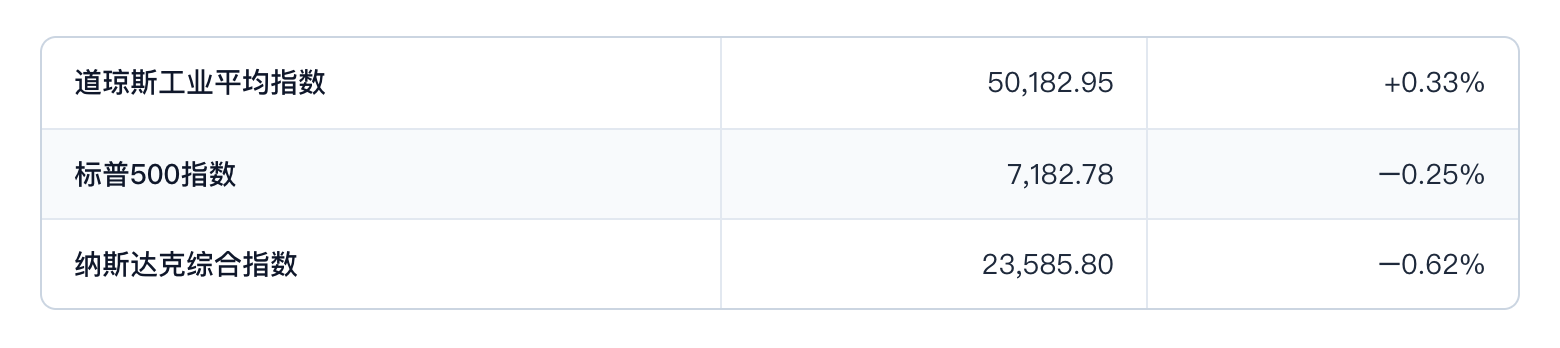
The shortened US equity session was scheduled to run from 22:30 Beijing time on November 27 to 02:00 on November 28. In the final pre-holiday session, the Nasdaq recovered from an intraday decline of more than 4% to close down 0.62%. The S&P 500 fell 0.25%, the Dow rose 0.33% and the VIX volatility index climbed to 28.29.
US regulatory developments differ in scope
On November 23, Commodity Futures Trading Commission staff issued guidance describing when certain regulated trading and clearing institutions may use BTC, ETH or payment stablecoins to meet specific financial-resource requirements. The assets remain subject to risk-based valuation discounts and liquidity limits. Eligibility depends on the institution and the requirement it is meeting.
Separately, Senators Elizabeth Warren and Chris Van Hollen made public a November 25 letter asking the Securities and Exchange Commission to withdraw a proposed crypto-asset rule and an exemption order covering some tokenized-securities trading platforms and liquidity providers. The letter was a request to the SEC; it did not itself change the existing arrangements.