
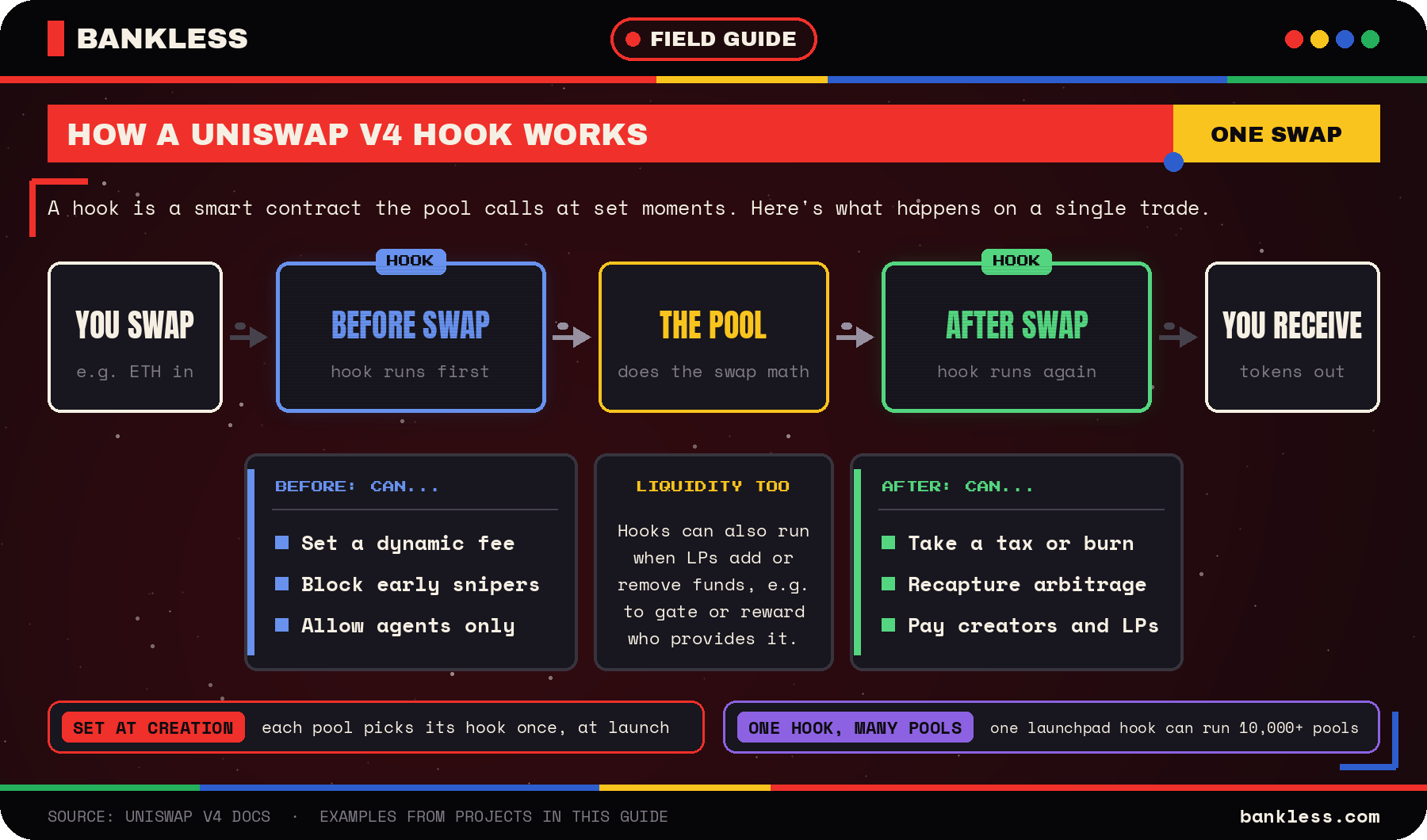
A developer designing a Uniswap v4 liquidity pool can use a Hook—a separate smart contract that runs custom logic at specified points in the pool’s lifecycle. Hooks can run before or after pool initialization, liquidity changes, swaps and donations. That gives developers a way to define behavior around those actions rather than relying only on a pool’s default behavior.
In an article published on November 7, 2026, at 16:12 (UTC+8), William M. Peaster of Bankless, translated by TechFlow, discussed Hooks in the context of Robinhood Chain. The article describes dynamic fees, time-weighted average market-making, limit orders and other liquidity mechanisms as potential uses. These are design possibilities, not features that every Hook or pool provides.
Projects described in the report
The article names Hookr as a project intended to adjust concentrated-liquidity ranges when prices move outside a principal trading range. It describes Pearl DEX as using a customized Hook to alter slippage protection during volatile periods and direct part of a premium to a staking pool. It also describes a cross-protocol aggregation Hook intended to connect on-chain liquidity with centralized order-book depth for split-order routing. These are the article’s descriptions; the source does not provide independent verification of the projects’ implementations or results.
The article further argues that Robinhood’s retail users could bring trading flow attractive to liquidity providers, potentially reducing impermanent loss and increasing fee income. Those are the author’s proposed economic effects, not demonstrated outcomes in the supplied report.
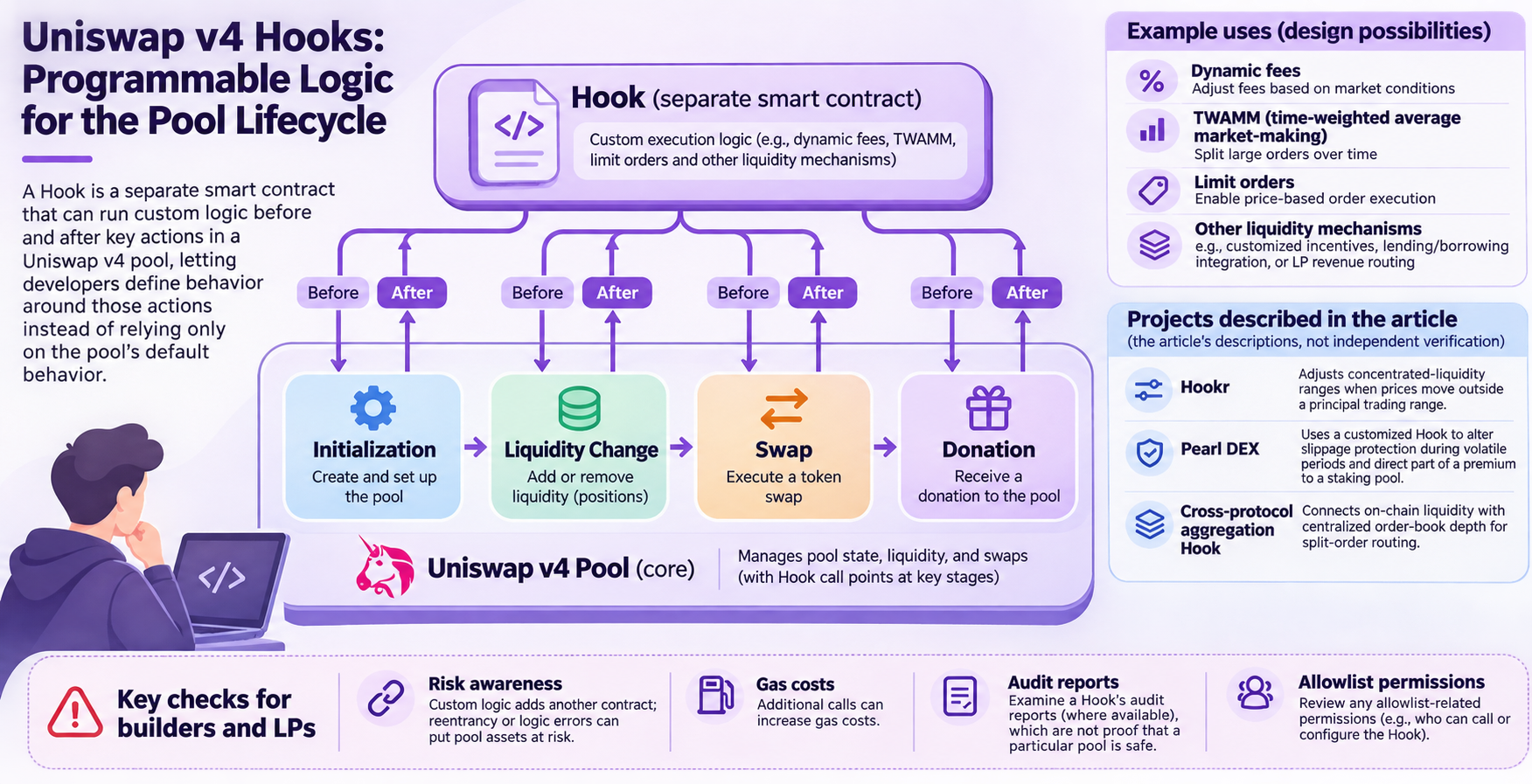
What builders and liquidity providers should check
Custom execution logic adds another contract whose permissions and failure modes matter. The article flags reentrancy or logic errors as potential risks to pool assets and notes that additional calls can increase gas costs. It advises liquidity providers to examine a Hook’s audit reports and any allowlist-related permissions. An audit report, where available, should not be mistaken for proof that a particular pool is safe.
Source: techflowpost.com (originally published 2026-11-07 16:12 UTC+8)