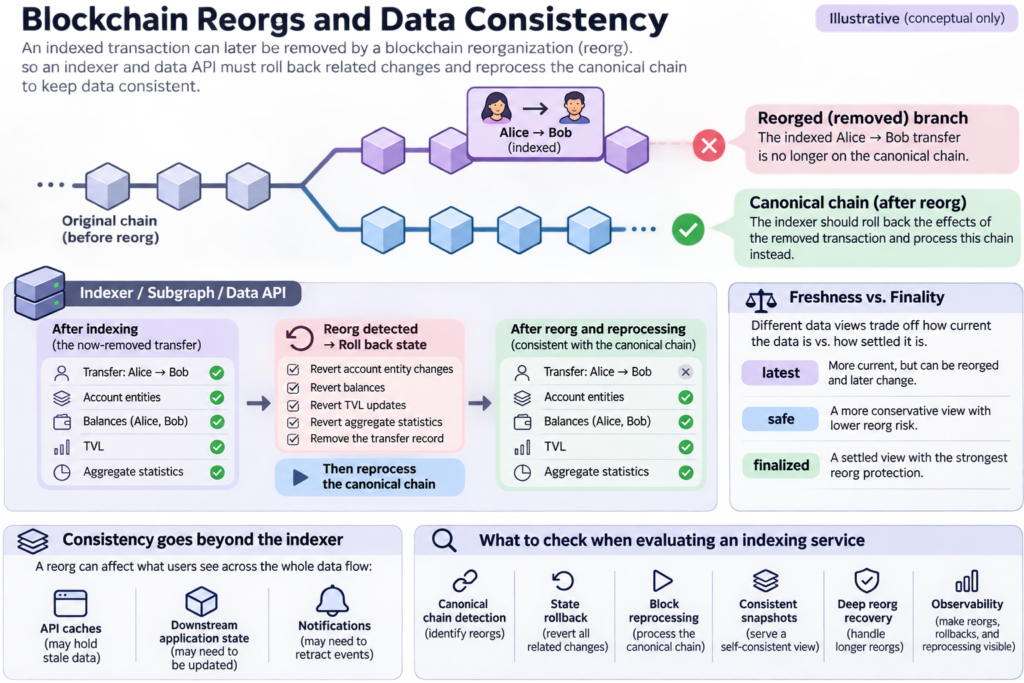
If you build a subgraph or data API, indexing a transaction is not the end of the job. A blockchain reorganization, or reorg, can replace blocks that your service has already processed. Data returned by the API may then no longer match the canonical chain.
Consider an indexed transfer from Alice to Bob that is later removed by a reorg. Deleting the transfer record alone would leave inconsistent data if the indexer had also changed account entities, balances, total value locked (TVL), or aggregate statistics. The indexer needs to reverse those related changes and process the canonical chain instead.
The distinction between freshness and finality matters here. Data from latest blocks may be more current, while safe and finalized views offer different trade-offs about how settled the data is. Consistency also extends beyond the indexer: API caches, downstream application state, and notifications that retract events can all affect what users see.
When evaluating an indexing service, check how it detects the canonical chain, rolls back state, reprocesses blocks, provides consistent snapshots, recovers from deep reorgs, and makes those operations observable. These were the capabilities highlighted in the original discussion published on November 12, 2026, at 22:40 UTC+8.