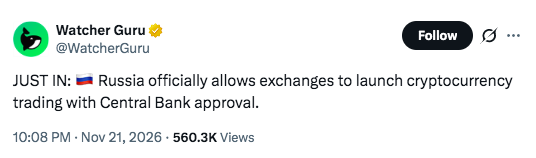
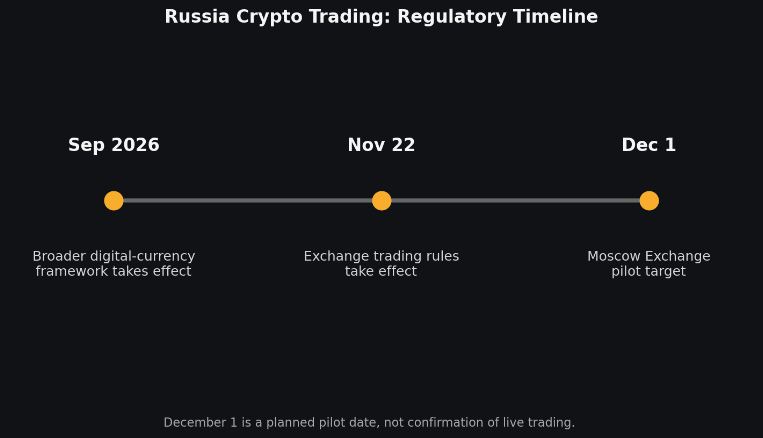
Russia’s rules for exchange-based cryptocurrency trading reportedly took effect on November 22, 2026. As of the November 23 report, Moscow Exchange was targeting December 1 for its first pilot transactions in Bitcoin, Ethereum and USDT. The rules did not themselves open a market: each exchange must obtain Bank of Russia approval for its trading procedures and prepare its systems before trading can begin.
What exchanges must do
According to the Bank of Russia’s regulatory announcement, exchanges must register participating brokers, asset managers and clearing institutions. They must also keep transaction records, monitor trading, calculate market prices and submit information to the central bank.
The rules follow broader digital currency legislation that reportedly took effect in September 2026, establishing a legal framework for exchanges, brokers and digital asset depositories. The authorization concerns trading, not payments: using cryptocurrency for everyday purchases remained prohibited in Russia.
How the Moscow Exchange pilot was designed to work
Moscow Exchange had been testing its existing securities-trading infrastructure with professional market participants ahead of the planned pilot. Under the plan, the National Clearing Centre would clear transactions, with same-day and next-day settlement options expected. The proposed trading session would run from 6:50 a.m. to 11:50 p.m. Moscow time.
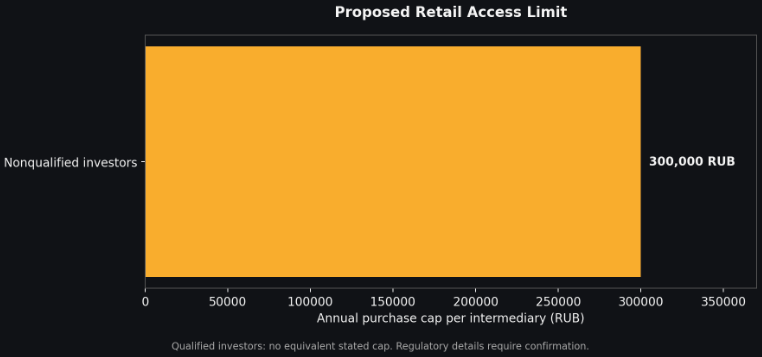
Under the reported framework, nonqualified investors face an annual cryptocurrency purchase limit of 300,000 rubles per intermediary. Qualified investors were expected to have broader access without that cap. Both Moscow Exchange and the National Clearing Centre remained subject to US sanctions, which could limit international participation and complicate settlement involving dollar-linked assets such as USDT.
Access through established brokers could bring in investors who had avoided specialized crypto exchanges. But trading volume alone would not establish new Bitcoin demand: some investors might simply move existing activity to the regulated venue. Broker participation, liquidity and investors’ ability to access and withdraw their holdings were still open questions ahead of the pilot.